







Bird Control for Warehouses

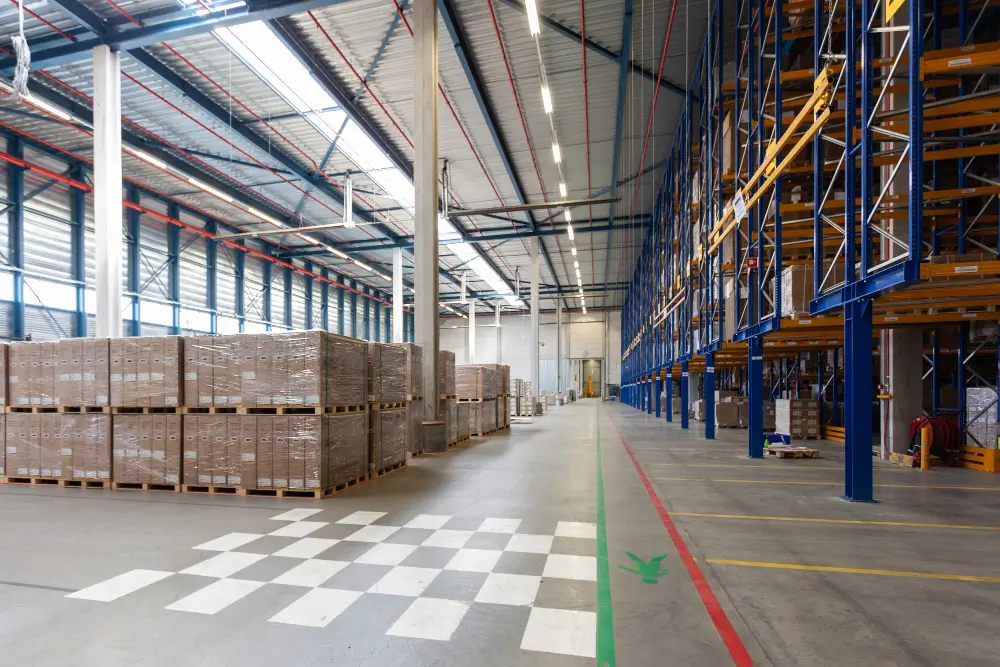
Pigeons roosting on high roof steel inside a distribution warehouse
Warehousing & Logistics

Seal the Roof, Not Just the Racking

A warehouse is the easiest building in India for a pigeon to move into. Dock doors open all shift, the roof is fifteen metres up with kilometres of purlin to perch on, and nobody goes up there until something drips onto a pallet. By then the flock is resident, the racking tops are white, and your customer's inbound QC is asking questions.

Feather Guard by Bitco Integrated Pest Management LLP has been netting warehouse roofs since 1972 - 3PL and contract logistics sheds, e-commerce fulfilment centres, cold stores, bonded warehouses, CFA depots and agri godowns. We work at height, over live racking, without stopping your despatch.

The approach is simple and it does not change: seal the openings birds actually use, deny every perch above stored goods, and hand over drawings and photographs your customer audits can rely on. No poisons, no gels, no trapping.

High bay warehouse bird netting icon
High-Bay Specialists
Installation without stopping despatch icon
No Despatch Downtime
Long life UV stabilised netting icon
8-10 Year Net Life
The Problem

What Birds Actually Cost a Warehouse

Warehouse bird problems are cheap to prevent and expensive to live with. The costs are spread across cleaning, write-offs, claims and safety - which is exactly why they go unnoticed until someone adds them up.

Industrial Pigeon Control

Pigeons treat a warehouse the way they treat a cliff face: they want a high, sheltered, undisturbed ledge, and your purlins, roof trusses, sprinkler pipes and racking tops give them hundreds of metres of it. Flocks are site-loyal and breed up to six times a year, so a pair in March becomes a colony by Diwali. Netting one bay while leaving the next open simply moves them across the aisle - the roof has to be closed as one job.

Droppings on Stock, Cartons & Racking

This is where the money goes. A dropping on a carton means the carton is rejected, and in FMCG or pharma distribution the whole pallet gets quarantined. Droppings on racking tops and beams come down as dust during picking. On sprinkler heads and light fittings they mask and corrode; on steel, gutters and roof sheets uric acid strips galvanising until you are replacing purlins a decade early. Repeat cleaning at height is a permanent line item on your budget.

Nesting in High Roof Steel & Voids

Nests wedge into truss junctions, gutter lines, ventilator cowls and the space above false ceilings in the office block. They block roof drains, which is how monsoon water ends up on stock below. They choke turbo ventilators until the bearings go. And they bring their own pests - bird mites, carpet and larder beetles - which migrate into cartons and sacks once the chicks leave. A nest above a light fitting or a battery charging bay is a live fire risk.

Slip Hazards, Audits & Claims

Wet droppings on a dock, a mezzanine stair or an MHE aisle are a genuine slip-and-fall exposure, and one that shows up immediately in a safety audit. Customer and retailer audits treat visible bird activity as a housekeeping and contamination failure and score it accordingly. If you store food, pharma or packaging under a contract with hygiene clauses, an open roof is a compliance gap you cannot argue your way out of.

Site Reality

Where Birds Get Into Warehouses

Nine out of ten sheds we survey have at least three of these open on the day we walk in. None of them are difficult to close - they are just fifteen metres up, which is why they stay open.

Dock doors, levellers and vehicle bays

Shutters are up for the whole shift and birds simply follow the forklifts in, then climb to the roof steel above the staging area. The dock is the entry point on the majority of sites.

Turbo ventilators and roof extractors

Missing or corroded bird mesh on roof ventilators is a direct opening into the high bay. Nests inside the cowls also choke airflow and burn out the motors.

Gable-end louvres and ridge gaps

The triangular gable vents and the gap along the ridge line are almost never meshed properly. From the outside they look sealed; from a scissor lift you can see straight through.

Skylight frames and roof sheet junctions

Polycarbonate skylights shrink away from the sheet over a few summers, leaving a slot at the flashing. Small enough to miss from the floor, wide enough for a pigeon.

High roof steel, purlins and sprinkler runs

Not an entry point but the reason they stay - unbroken horizontal perch running the full length of the shed, directly above your racking. Exclusion without perch denial rarely holds.

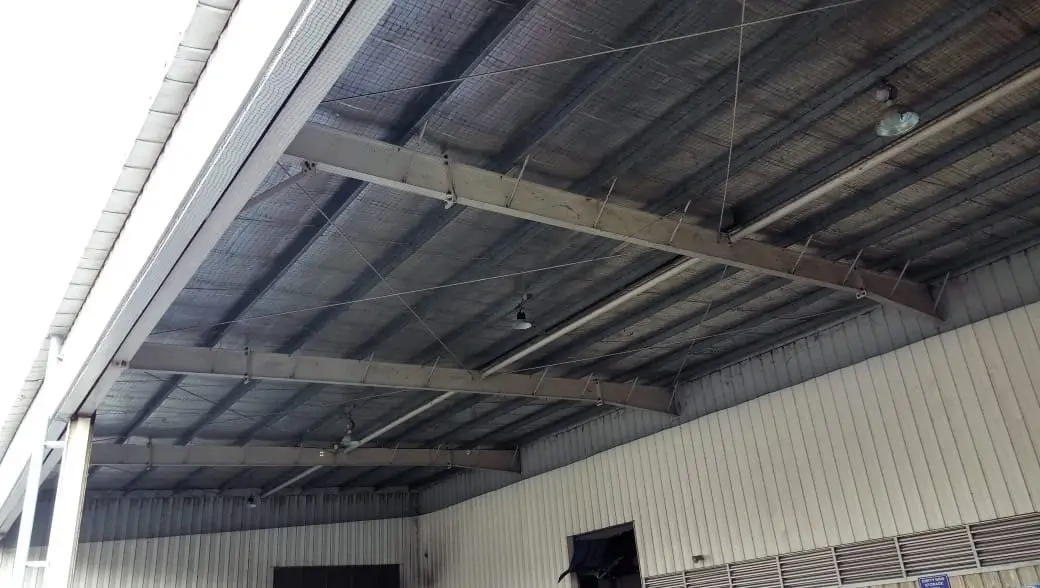
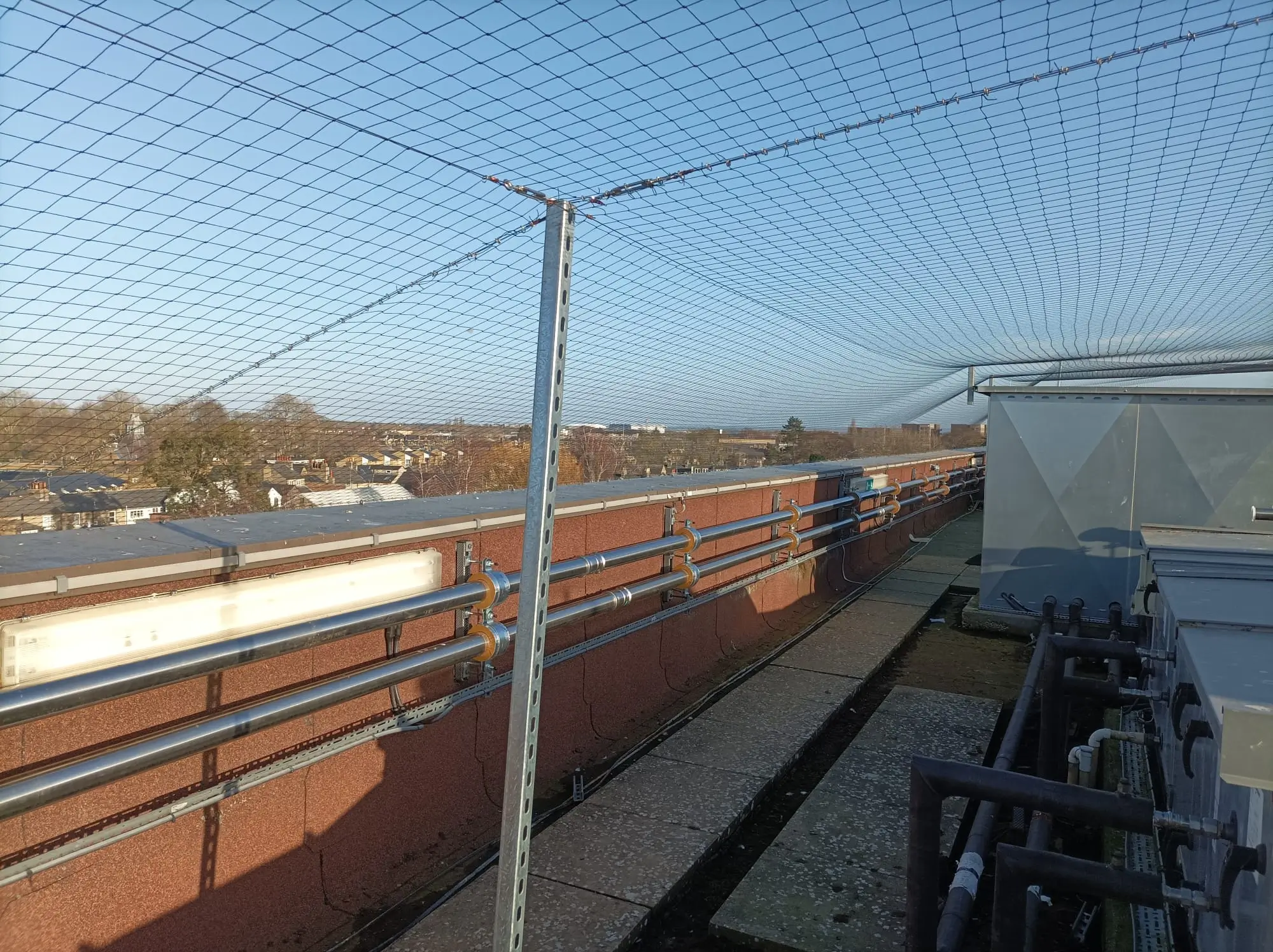
Industrial bird netting installed under the roof of a high bay warehouse
Transparent PVC strip curtains fitted to a warehouse loading dock door
Compliance

The Standards Your Customers Audit You Against

Most warehouses are not inspected directly by a regulator - they are audited by the brands whose stock they hold. Those audits treat bird activity as a contamination and housekeeping failure, and the clause is usually already in your contract.

FSSAI Schedule 4

Applies to any warehouse storing food or food packaging - requires effective measures preventing bird entry into storage areas.

GDP & GSP (Pharma Storage)

Good Distribution and Storage Practice require a controlled, pest-free storage environment with documented preventive measures.

ISO 9001 & ISO 22000

Quality and food safety systems both require evidenced preventive maintenance of the building envelope.

ISO 45001 & Factory Act

Droppings on docks, stairs and MHE aisles are a recorded slip hazard under occupational safety requirements.

Feather Guard is ISO, HACCP and GMP certified - so the contractor working above your racking is held to the same standard your customers hold you to.

The Solution

What We Install in Warehouses

Close the openings, then take away the perches. On most sheds the answer is roof netting plus dock curtains plus spikes on the steel - and a laser unit if the yard is feeding the flock. The survey decides the mix.

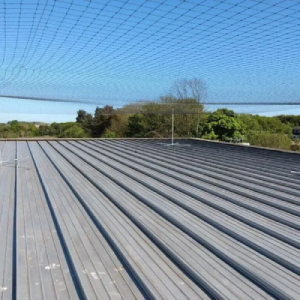
High tensile bird netting spanning the roof space of a distribution warehouse

Industrial Bird Netting

The core of every warehouse programme. High-tensile UV-stabilised HDPE mesh on stainless cable, spanned under the roof steel or across the truss line so the entire high bay becomes inaccessible in one pass. We install it taut and flush - a slack net sags into a debris shelf directly above your racking, which is worse than no net. Spans of 40 metres and more are routine. Rated 8 to 10 years, longer under a covered roof.

Explore Industrial Bird Netting
PVC strip curtains sealing a warehouse dock door against birds

PVC Strip Curtains

The single highest-return item on a warehouse dock. Transparent strip curtains let forklifts and pallet trucks straight through while keeping birds, flying insects and dust out - and they hold temperature at cold room and chiller boundaries at the same time. Food-grade grades available, easy to wipe down, replaceable strip by strip when one gets clipped. Usually pays for itself in cleaning alone.

Explore PVC Curtains
Bird spikes installed on warehouse purlins and racking tops

Bird Spikes

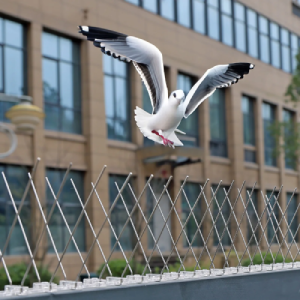
For the linear perches netting cannot economically cover - purlins, truss ledges, sprinkler runs, cable trays, light fittings, racking tops and dock canopies. Blunt-tipped and humane: the landing is denied without injuring the bird or the technician on the lift. Stainless steel in cold and wash-down areas, UV polycarbonate elsewhere. Captive, counted fixings so nothing can drop into stock below.

Explore Bird Spikes
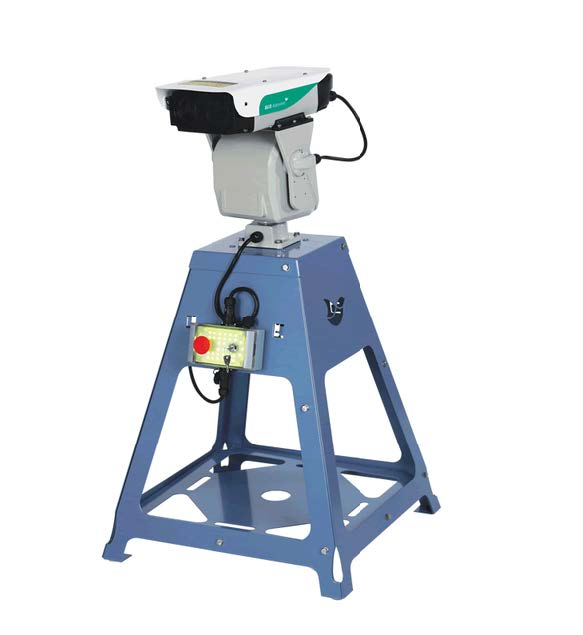
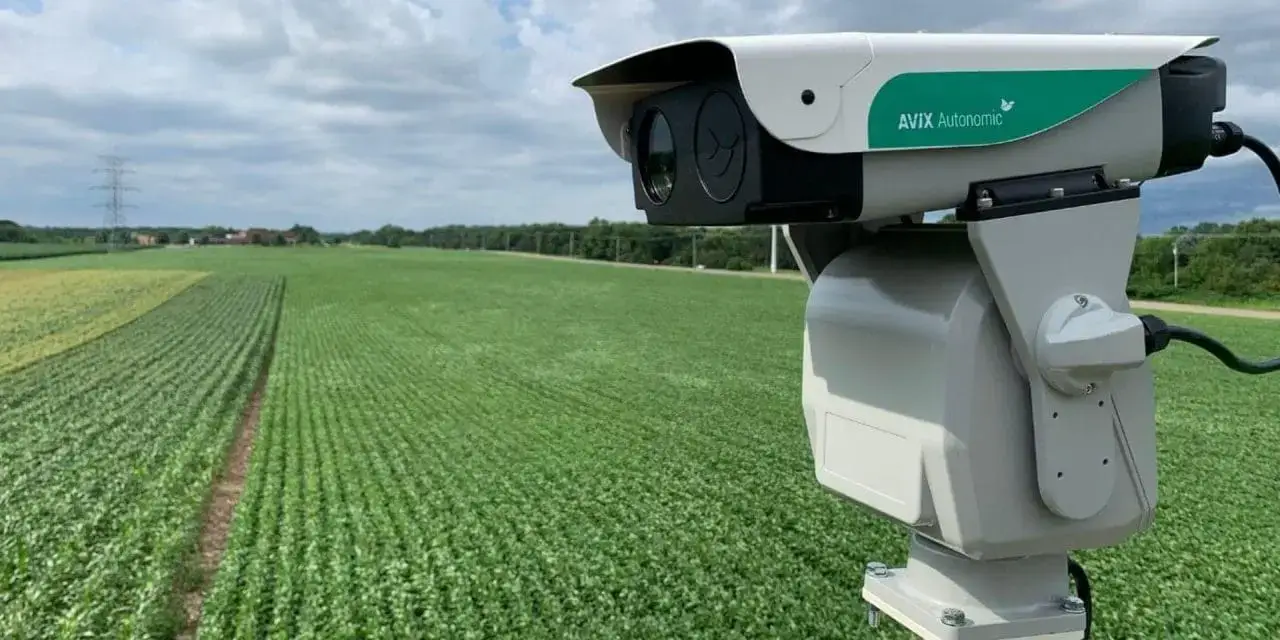
Automated laser bird deterrent covering a warehouse yard and roof

Laser Bird Deterrent

For the open areas around the shed that keep the flock on site - container yards, trailer parks, roof surfaces, waste and baling areas and boundary sheds. An automated head sweeps a programmed green pattern that birds read as an approaching object and vacate. Silent, no consumables, no habituation problem, and strongest at dawn and dusk when the flock is deciding where to settle.

Explore Laser Deterrents
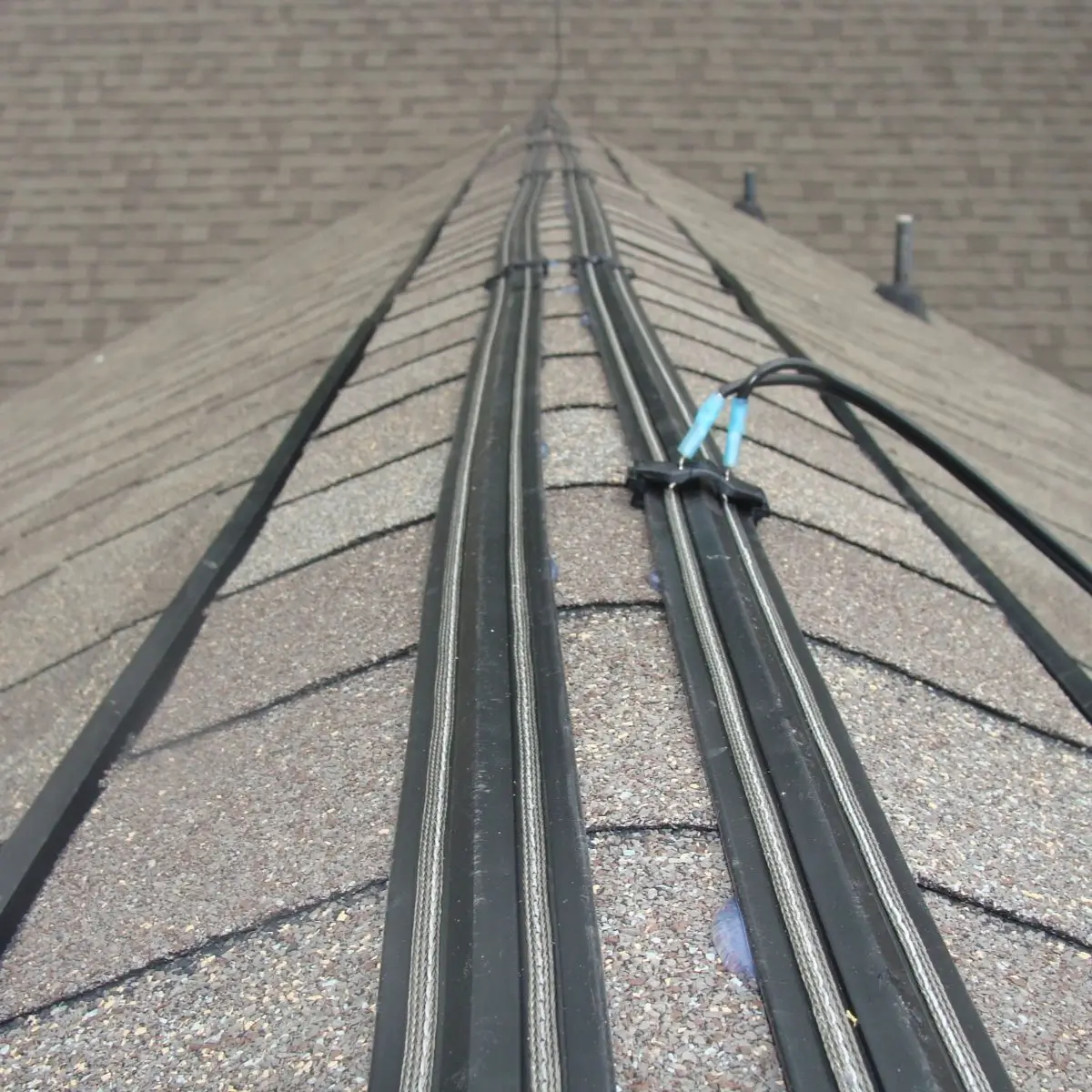
Bird shock track fitted to a warehouse office block ledge

Bird Shock Track

A low-profile track that gives a harmless static pulse the moment a bird lands, teaching the flock to abandon a position instead of just blocking it. That is why it clears the legacy roosts that have been spiked and re-spiked for years. Nearly invisible from the ground, so it suits the office block elevation, canopy edges and any frontage where spikes would look industrial.

Explore Bird Shock Track
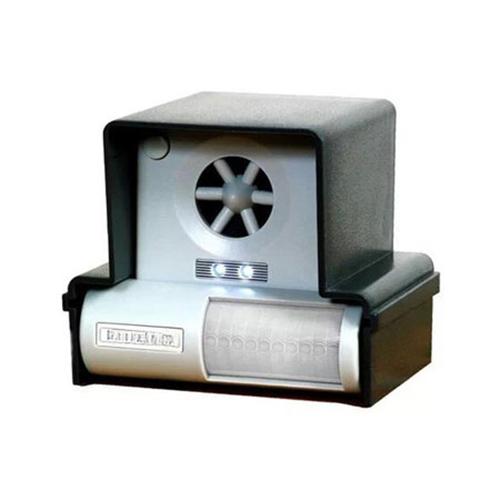
Sonic bird repellent unit installed in a warehouse loading area

Sonic Bird Repellent

For enclosed or semi-enclosed volumes where netting is impractical mid-project - large open sheds, transit bays and partially built structures. Broadcasts distress and predator calls of the target species so the flock reads the area as unsafe. Zoned and timed to your shift pattern. We are straight about its limits: it supports a programme, it does not replace exclusion.

Explore Sonic Repellents
Zone by Zone

Which Solution Goes Where

Straight out of our warehouse survey reports. Your shed will differ in span and height, but this is how a typical distribution facility gets covered.

Swipe the table sideways to see all three columns.

Zone Main Risk Recommended Solution
High-bay racking & roof steel Droppings on cartons, pallets and racking tops Full-span roof netting + spikes on purlins and truss ledges
Dock doors, levellers & staging Birds entering with every vehicle movement PVC strip curtains + bay netting + door-gap proofing
Turbo ventilators & roof extractors Direct entry, blocked airflow, motor burnout Mesh proofing of every opening + nest clearance
Gable ends, ridge line & skylights Hidden openings that reopen the shed after netting Mesh and net closure at every junction and flashing
Mezzanine, VAS & pick modules Droppings falling onto open cartons during picking Netting above the module + spikes on service runs
Cold room & chiller anteroom Birds sheltering in the warm anteroom, door gaps PVC curtains + door-gap proofing + netting over approach
Battery charging & MHE bay Nesting above electrical equipment - fire risk Netting the void + spikes on cable trays and fittings
Sprinkler runs & light fittings Masked sprinkler heads, corroded fittings Spikes on pipe runs + net exclusion above
Yard, container park & waste area Feeding and loafing site sustaining the flock Laser deterrent + housekeeping + netting on covered structures
Office block & visible elevations Bird activity in front of customers and auditors Shock track on ledges + nearly invisible netting
How We Work

From First Walk to Customer Audit

Working at height over live racking is a sequencing problem before it is a netting problem. This is the order we follow, and skipping a step is usually why someone else's net failed in two years.

1

Site survey and bird pressure mapping

We walk the shed at dawn or dusk when birds are actually settling, identify the species, count roosting and nesting positions, and mark every opening on your layout. You keep the map whether or not you appoint us.

2

Span, access and load design

Roof netting is a structural job. We check what the trusses and purlins can carry, design the cable grid and anchor points to suit, and plan lift access down the aisles so racking does not have to be de-stocked.

3

Nest clearance and clean-down

Nests, eggs, droppings and debris are removed and bagged by technicians in PPE, and the steel is cleaned before anything goes up. We never close a roof with birds still inside it.

4

Bay-by-bay installation around your shifts

Work moves one bay at a time, sheeted below so nothing lands on stock, tools tethered and counted in and out. Aisles are handed back swept at the end of each shift. Despatch keeps running.

5

Handover pack

Marked-up drawings, mesh and hardware specifications, anchor details, warranties and dated before-and-after photographs - the pack your customer auditor will ask to see.

6

AMC, inspection and trend reporting

Annual checks on net tension, perimeter cable, turnbuckles and anchors, plus any new pressure points. Reports show bird activity trending down, which is what turns an installation into a defensible programme.

Feather Guard team conducting a Gemba survey inside a warehouse
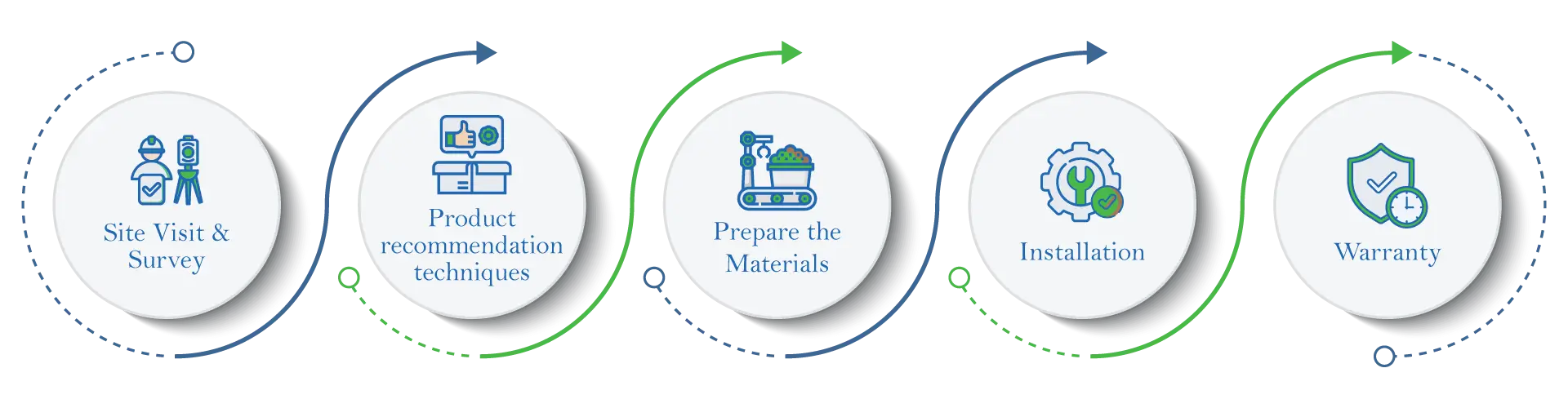
Feather Guard bird control process flow for warehouses and distribution centres

Why Warehouse Operators Stay With Us

  • 52+ years in Integrated Pest Management, industrial sheds throughout
  • ISO, HACCP and GMP certified contractor
  • High-bay spans of 40 m and more handled as routine work
  • Installation over live racking without de-stocking or stopping despatch
  • No poisons, gels, adhesives or trapping - exclusion only
  • Captive, counted fixings so nothing drops into stock
  • Handover pack built for customer and retailer audits
Sectors We Cover

Warehouse Types We Bird Proof

FAQ

Bird Control in Warehouses - Common Questions

Yes, and that is how we do most jobs. We plan lift access down the existing aisles, work one bay at a time, and sheet off the racking below the working zone so nothing - dust, offcuts, fixings - reaches your stock.

Aisles are handed back swept at the end of every shift. On a live 3PL site we typically take one or two aisles out of picking rotation at a time, which your WMS can usually absorb without a despatch impact.

It depends on what you are protecting and what the roof structure allows. Netting tight under the roof sheet excludes birds from the truss space entirely - the cleanest result, and the right answer where the trusses themselves are the roost.

Netting across the underside of the trusses is faster and cheaper, and it stops droppings reaching stock, but birds still occupy the space above and the net becomes a debris shelf you have to clean. We recommend the first option in food, pharma and packaging warehouses, and we will tell you honestly when the second is enough.

It must not, and a competent installation does not. Netting is positioned relative to the sprinkler plane so spray pattern and heat response are unobstructed, and we work to your fire consultant's or insurer's requirement on clearances.

This is worth checking with any quote you receive. A net thrown across a high bay without reference to the sprinkler layout is a real compliance problem, and it is the most common defect we find on other contractors' installations.

Our UV-stabilised HDPE mesh is rated 8 to 10 years outdoors and longer under a covered roof, where it is out of direct sun.

But the mesh is rarely what fails. It is the perimeter - cable, turnbuckles, anchors and fixings. Where we specify stainless hardware and inspect it annually, warehouses routinely get a decade or more. Cheap nets fail at the edge, not in the middle, and a failed edge means a bird door.

On most sites, yes. Roof openings let birds in occasionally; an open dock door lets them in continuously, all shift, following every forklift. It is also the cheapest opening to fix.

PVC strip curtains on the dock plus proofing the dock leveller pit gap will often cut visible bird activity noticeably before the roof net is even ordered. If budget has to be staged, that is where we tell clients to start.

Because cleaning is a recurring cost that never reduces, and it does not address the risk. Working at height to clean purlins and racking tops carries its own safety exposure, it takes aisles out of use, and the droppings are back within weeks.

Run the numbers over five years: repeat high-level cleaning, rejected cartons, quarantined pallets, early replacement of corroded steel and gutters, plus the audit exposure. Exclusion is a one-time cost against a permanent one.

Yes, and it happens before any exclusion goes up. Nests, eggs, droppings and contaminated debris are removed by technicians in PPE, bagged and disposed of off site, and the steel is cleaned down.

Sealing a roof with birds still inside is the most common mistake we get called in to correct. A few weeks later you have carcasses on the net, a beetle infestation working its way into cartons, and a decontamination job instead of a bird job.

From 10,000 sq ft standalone godowns to multi-lakh sq ft fulfilment centres and cold chain campuses. Large high-bay sheds are the work we do most, and spans over 40 metres are routine rather than exceptional.

We operate across Gujarat, Maharashtra, NCR, Bengaluru, Hyderabad, Chennai, Kolkata and Pune, with our own trained and insured crews rather than local subcontractors. Multi-site rollouts for 3PL operators are handled to a single specification so every shed in the network matches.

Next Step

Start With a Free Site Survey

Send us your shed location and we will walk it at the hours birds are actually settling - including the roof steel and gable ends nobody has looked at since handover. You get a bird pressure map, a bay-by-bay recommendation and a written scope. No obligation, and the map is yours either way.

Prefer to see it work first? Take the risk-free demo: we proof one bay or one dock of your choice and you pay only after you are satisfied with the result.

Book Your Free Survey

WHY CHOOSE US

Expertise That Sets Us Apart

Experienced & Trained Technician

With years of industry experience, we offer trusted, professional bird and Integrated Pest Management solutions backed by a proven track record.

100% ERP & Insured Staff

With 100% ERP integration, we’ve enhanced our operations, made informed decisions, and continue delivering top-tier solutions to our clients.

Labour Law Complied

Our services strictly adhere to labor law regulations, ensuring legal compliance, fair practices, and protection for both staff and clients.

Focused Industry Solution

We provide focused industrial solutions tailored to your specific needs, ensuring efficiency, reliability, and optimized performance in every operation.

Maintain Safety

We prioritize safety on-site by ensuring that all our products are completely safe for humans. Our commitment to non-harmful solutions reflects our dedication

Customized Solution

Every client’s needs are unique. We provide customized solutions based on the specific requirements of your premises and bird pressure levels

Innovative Technology

We use cutting-edge bird proofing devices like ultrasonic repellents, bird spikes, and laser deterrents, ensuring the most advanced and effective solutions

Long-Lasting Protection

Our products, such as UV-treated bird nets and durable spikes, are designed to last for years, providing cost-effective, low-maintenance protection

Guaranteed Results

We provide 100% effective, long-lasting solutions to keep your property safe from birds like pigeons, ensuring peace of mind.


Risk-Free Demo:
Experience Our Services

We propose to offer you a DEMO of our Bird Proofing Solutions in any critical area identified by you, billing for which would be done only after your positive feedback on completion of evaluation period of may be 1 month.

TRUSTED BY INDUSTRY LEADERS

Our Esteemed Clients

Locations we Serve

Ahmedabad | Amreli | Anand | Aravalli | Banaskantha | Bharuch | Bhavnagar | Bhuj | Botad | Champaner | Chanasma | Chhota Udaipur | Chikhli | Dabhoi | Dahod | Dang | Deesa | Devbhoomi Dwarka | Dharampur | Dholera | Dudhrej | Gandhidham | Gandhinagar | Gir Somnath | Godhra | Gondal | Idar | Jamnagar | Jetpur | Junagadh | Kalol | Khambhat | Kheda | Kutch | Lakhpat | Mahisagar | Mandvi | Mehsana | Morbi | Nadiad | Narmada | Navsari | Panchmahal | Palanpur | Palitana | Patan | Porbandar | Radhanpur | Rajkot | Sabarkantha | Saputara | Siddhpur | Songadh | Surendranagar | Surat | Tapi | Vadnagar | Vadodara | Valsad | Vapi | Veraval | Vyara | Wankaner

Agra | Aligarh | Allahabad (Prayagraj) | Amritsar | Amroha | Aurangabad | Bengaluru | Bhopal | Chandigarh | Chennai | Coimbatore | Delhi | Dhanbad | Faridabad | Firozabad | Gurgaon | Guwahati | Gwalior | Hubli-Dharwad | Hyderabad | Indore | Jabalpur | Jaipur | Jodhpur | Kalyan-Dombivali | Kanpur | Kolkata | Lucknow | Ludhiana | Madurai | Meerut | Moradabad | Mumbai | Nagpur | Nashik | Patiala | Patna | Pune | Raipur | Siliguri | Solapur | Srinagar | Thane | Varanasi | Vasai-Virar | Vijayawada | Visakhapatnam

Andhra Pradesh | Arunachal Pradesh | Assam | Bihar | Chhattisgarh | Goa | Gujarat | Haryana | Himachal Pradesh | Jharkhand | Karnataka | Kerala | Madhya Pradesh | Maharashtra | Manipur | Meghalaya | Mizoram | Nagaland | Odisha (Orissa) | Punjab | Rajasthan | Sikkim | Tamil Nadu | Telangana | Tripura | Uttar Pradesh | Uttarakhand | West Bengal